The approval of Portugal’s first pollinator conservation and sustainability plan in 2026 marks a pivotal opportunity to protect these cornerstones of biodiversity in the country. Citizen-generated data plays a central role in the plan, feeding monitoring schemes that are expected to receive growing official support. Now it’s time to put the plan into action.
In an effort to build strategic collaborations between authorities and citizen science initiatives to support the implementation of the plan, more4nature brought together inspiring examples of our cases in the Netherlands and Ireland — some of them working with pollinators, but also in air quality, freshwater ecological health, and coastal pollution domains — in a joint webinar entitled “Cruzando fronteiras pelos polinizadores” (“Crossing borders for pollinators”). The goal was to showcase that close and durable collaboration is feasible and beneficial for all stakeholders involved.
The webinar took place online on 16 June 2026, organized by FCiências.ID with the support of other more4nature partners, as one of the activities of the Portuguese national case. Presented by Cristina Luís (CIUHCT, FCT NOVA) and Esther Marín-González (CIUHCT, Ciências ULisboa), the webinar featured three speakers that brought with them inspiring and insightful experiences on collaboration between citizens and authorities already underway.
Hester Volten: Measure Together, a citizen science infrastructure that yields data and dialog
Hester Volten, from the National Institute for Public Health and the Environment in the Netherlands (RIVM), opened the session with the story of Measure Together (Samen Meten), a Netherlands’ citizen science infrastructure focused on air quality. Since its launch in 2017, the network has grown from a handful of sensors to roughly 4,000 today, feeding hourly air quality data alongside RIVM’s own official monitoring stations.
The secrets to the success of such an initiative, as explained by Hester, were twofold. First, they asked citizen scientists what they needed and discovered, for example, that data quality assessment was a top concern. Then, they built a strong infrastructure that brought together the community and their data combined with official data in one place.
The payoff goes both ways. Denser sensor coverage sharpens official air quality models and creates more detailed air quality maps that are quite useful for policymakers. Besides, having citizens directly involved builds trust, generates media attention, and brings local knowledge that official monitoring alone can’t capture into the conversation. This can end up supporting policymakers in the promotion of policies they wish to implement. As Hester put it, citizen science is both data and dialog, and that combination is what makes it valuable.
Sven Teurlincx: Is having good data enough?
Sven Teurlincx, from the Netherlands Institute of Ecology (NIOO-KNAW) and Radboud University Nijmegen offered a more sobering case. Dutch butterfly monitoring, coordinated by the NGO De Vlinderstichting in collaboration with other initiatives, has collected over 30 years of citizen science data. This data has been verified by the Dutch Bureau for Statistics, and its quality is not in question. The decline of pollinators decline is well documented, and yet, it continues. Why? There is no clear vision on how to proceed locally, nor any concrete deadline or obligation set by the EU Habitat Directive and overlapping concerns regarding land use, all which translates into little pressure to act.
Water quality showed a different dynamic. Official monitoring under the EU Water Framework Directive is strict but only covers around two-thirds of the Netherlands’ water bodies, leaving out many smaller waters that people live near and care about, such as small ditches, local ponds, canals, etc. That gap is where NIOO’s Catch the Water Monster campaign (2019–2023) stepped in, co-designing simplified methods in collaboration with NGO Natuur en Milieu and water authorities to measure underwater plant life, nutrients or the presence of aquatic invertebrates.
Sven’s takeaway: data needs to be good enough, but good data doesn’t create action. Pairing solid science and co-creation with authorities can create trust in data. By having an NGO willing to support the advocacy work, we can turn evidence into impacts at policy, media and educational level.
Eoin Dubsky: Catching the leaks in the Single-Use Plastics ban
Eoin Dubsky, from Coastwatch brought to the table his experience with coastal monitoring. The EU Single-Use Plastics Directive banned items like plastic cutlery and polystyrene containers but does not require any monitoring or reporting. Official monitoring proved a limited substitute: just five beaches were checked four times a year, against Ireland’s 7,000+ km of coastline.
Coastwatch filled that gap by adding specific questions on banned items to its long-running autumn survey in 2021. The results told a clear, if mixed, story: a sharp initial drop in banned items found on shores, followed by stagnation and even a reversal (i.e. increase) for some products. Since manufacturing was banned, the data pointed to ongoing sales and cross-border leakage as the likely culprits.
A positive outcome is that these data were incorporated into the official EU Marine Strategy Framework Directive marine litter monitoring protocol, but Coastwatch did not stop there. A government-convened workshop with all relevant agencies raised the question and triggered environmental compliance assurance actions in terms of enforcement, monitoring and promotion.
Collaboration is the way forward
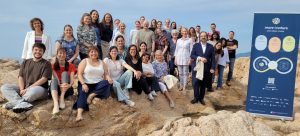
The webinar reached representatives from regional and national institutions, research institutes, Portugal’s pollinator Action Plan coordinators, and NGO, a mix of actors that we believe key to mobilizing citizen-generated data and citizen and community led actions into Portugal’s pollinators conservation strategy.
As the country moves from designing its Action Plan to implementing it, these European experiences offer a practical starting point: collaboration between authorities and citizen science initiatives is already working.
This webinar was organised as part of the more4nature project. We extend our gratitude to all participants for their presence and contribution to this session, and to our speakers, Hester, Sven, and Eoin. Their expertise and practical experience prove invaluable to all attendees.